

Finicky Window Cleaning has served commercial properties across Pinellas and Hillsborough County since 2002, covering high-rise window cleaning, building washing, parking lot and garage cleaning, and post-construction cleanup for retail centers, government buildings, hospitals, and multi-tenant plazas. Dumpster pad cleaning is part of that same commercial capability because a neglected pad is a facility management liability, not a minor nuisance. It affects tenant satisfaction, property appearance, and compliance exposure, and property managers often hear about it from inspectors or tenants before it makes their own cleaning schedule.
We are direct with every commercial client from the start: concrete is porous, and grease that has saturated the surface over months will improve significantly with professional cleaning but may not disappear completely in one pass. The best results come from a recurring maintenance program, not a single clean. That is especially true in Pinellas and Hillsborough County, where year-round heat, humidity, and frequent rain accelerate grease breakdown and organic growth on commercial hardscape faster than most expect. We use a proprietary cleaning solution that is environmentally safe for humans and pets, add commercial degreasers on dumpster pad work, bring in hot water when the job calls for it, and follow OSHA and applicable state, federal, county, and environmental regulations on every job.



Our minimum for commercial dumpster pad cleaning starts at $300. As a general reference, exterior cleaning services through Finicky Window Cleaning average between $300–$1,000, though that band reflects a wide range of service types and conditions rather than a ceiling specific to dumpster pad work. Commercial pricing is always confirmed after a physical walkthrough because grease load, access constraints, and runoff requirements vary too much between properties to quote accurately over the phone. Exact pricing details are available upon request.
Here is what shapes the final number:


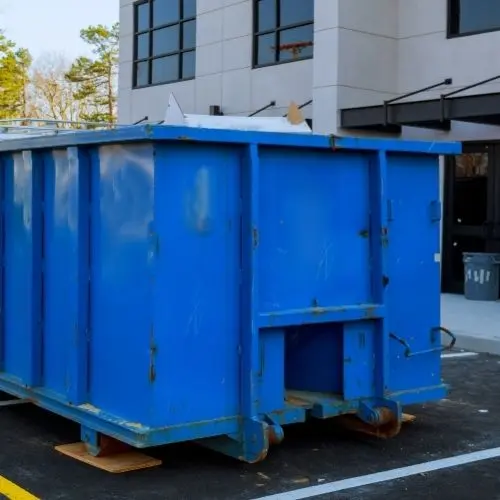
Concrete dumpster pads carry heavier contamination than almost any other commercial surface in the region, and basic rinsing will not cut through the grease and liquid runoff that builds up from daily trash handling. We use commercial-grade degreasing, hot water for stubborn buildup, and surface cleaners for consistent flatwork results. Concrete is porous, so deep grease staining will improve noticeably but may not disappear entirely in a single clean, and recurring service is what keeps it from reaching that point.
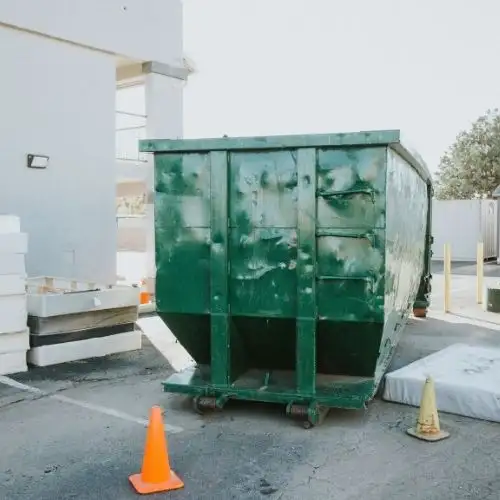
Grease and grime rarely stay confined to the pad itself across Pinellas and Hillsborough County commercial properties, where foot traffic and daily runoff spread contamination to adjacent walkways and curb areas that tenants and visitors actually see. We include surrounding hardscape in the service scope when site conditions allow, using targeted cleaning patterns and appropriate wand selection for edges near walls and drainage points. Runoff handling follows the same site-specific rules as the pad.
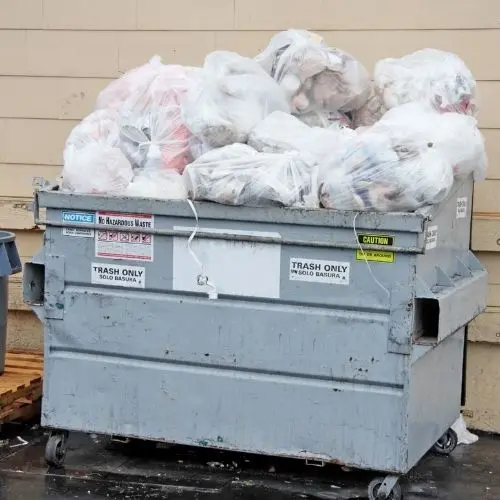
Restaurant tenants and high-volume multi-tenant plazas generate grease and organic contamination at a rate that a one-time clean cannot keep up with, which is why degreasers and hot water are always part of the process at these sites. A monthly or quarterly maintenance program is what keeps the pad from becoming a complaint item for tenants, health inspectors, or code enforcement in this climate.


Since 2002, Finicky Window Cleaning has serviced government buildings, hospitals, banks, multi-tenant plazas, condominiums, and office properties throughout Pinellas and Hillsborough County. We understand the documentation requirements, after-hours logistics, and liability considerations that come with active commercial environments and plan every job accordingly.

Not every pressure washing company runs a commercial hot water unit, but we do, and on dumpster pad jobs it makes a measurable difference. Hot water breaks down grease at a level cold water cannot match, especially on pads that have not been serviced in months.

We follow OSHA and applicable state, federal, county, and environmental regulations on every commercial job. Cones are always deployed, hose mats go down over sidewalk crossings, traffic direction is in place when the area is active, and when water extraction is required instead of standard drainage rinsing, we adjust the workflow before the job begins.

We provide written proposals with clear scope of work and can include our certificate of insurance and a list of commercial references from comparable properties when your approval process requires it. This makes vendor onboarding straightforward without unnecessary back-and-forth.

A significant portion of our commercial work happens after hours or at night, scheduled around your property’s operational needs. For active commercial properties where dumpster areas are in use during the day, night work reduces both safety exposure and disruption to tenants and vendors.

Our recurring maintenance options run monthly, bi-monthly, and quarterly, with custom cadences available for properties that have specific scheduling requirements. Regular service keeps grease from building to the point where it becomes an odor complaint, a health code concern, or a line item on a tenant’s lease renewal conversation.

We do not use subcontractors. Every technician on your property is part of our trained in-house team. We hold a 4.9-star Google rating with over 140 reviews, is BBB Accredited, and is a member of the IWCA. Commercial references from comparable accounts are available on request.

Commercial dumpster pad work always starts with a physical site visit because the variables matter too much to quote over the phone. We evaluate grease load, access constraints, enclosure dimensions, hot water need, and runoff requirements, whether standard drainage is appropriate or water extraction is required for your specific property.
After the site review, we produce a written proposal with clear scope and pricing, and can include our certificate of insurance and commercial reference list when needed for vendor approval. Scheduling is built around your operations, with after-hours or overnight work often the right call for higher-traffic properties.
You receive a confirmation email with date, time, and a confirmation option; a follow-up email about seven days prior; a text reminder two days out; and a call or text from the lead technician with an ETA on service day. Site-specific prep instructions including access points, enclosure access, and areas to keep clear are communicated verbally and in writing.
Cones are deployed around the work zone, hose mats go down over sidewalk crossings, traffic direction is established, and signage or caution tape is used as the site requires. For multi-tenant properties, we can post notices at mailboxes or common areas ahead of service, or coordinate with the property manager when that notification is their responsibility.
We stage multiple pressure cleaning machines, surface cleaners, our hot water unit when required, and the handles, wands, and nozzles suited to the access conditions and surface types on your specific pad. Surface cleaners give uniform coverage across flat concrete; wand work handles edges, corners, and enclosure walls.
We apply our proprietary cleaning solution, which is environmentally safe for humans and pets, and add commercial degreasers when the grease load requires it, which on most commercial dumpster pads it does. Where vegetation borders the pad or surrounding walkways, we pre-wet and rinse those areas before applying chemicals to protect landscaping.
Surface cleaners run across the flat pad for consistent results, and wand work handles edges, corners, and areas adjacent to enclosure walls. Older stains may improve significantly but will not always disappear entirely due to concrete porosity, and we make sure that expectation is set clearly before we start.
Most sites allow standard drainage rinsing to approved on-site drainage. For properties with stricter environmental requirements, we perform water extraction, with the specific approach confirmed during the onsite review and written into the proposal before any work begins.
The lead technician walks the cleaned area before packing up, checking for missed sections, streaking, or corner buildup. Payment options are reviewed and sent by the office email, and a follow-up goes out two to three days after service to check satisfaction and invite a review.


We back every job with a 100% Satisfaction Guaranteed policy and a 30-Day Clean Guarantee. If something is not right after we have left, we investigate what happened, schedule a return visit, and fix it. Our technicians confirm quality before leaving every job, but if a concern comes up after the fact, we find out what fell short and go back to address it.


Yes, if your property requires it, we can perform water extraction as part of the dumpster pad cleaning service. Some sites, especially larger commercial facilities with stricter environmental requirements, ask for extraction, while most locations allow standard rinsing into approved drainage areas. This depends on the specific site rules and the scope of work discussed during the onsite review.
The main difference is how wastewater and runoff are handled based on your site’s requirements. Some properties require water extraction instead of standard rinsing, and we adjust the workflow to align with applicable environmental expectations. We follow OSHA and applicable state, federal, and county regulations and environmental laws for commercial exterior cleaning work.
We typically use the customer’s on-site water supply for commercial dumpster pad cleaning. If water access is limited or the job is large-scale, the plan may involve using water from different nearby sources or, for very large commercial jobs, connecting to a fire hydrant. Bringing water is possible for commercial work, but it is rare.
We often complete commercial dumpster pad cleaning after hours or at night when it is safer and there is less traffic, but it is ultimately the customer’s choice. If the work is performed during business hours, we use jobsite safety controls to reduce disruption and keep the area organized. Scheduling is planned around what works best for your property’s operations.
We use visible safety controls like cones, traffic direction measures, and hose mats when hoses cross sidewalks. These steps reduce trip hazards and improve safety for tenants, staff, and visitors while the dumpster pad area is being cleaned. Depending on the site layout, parts of the immediate work zone may need to be temporarily managed during active cleaning.